
Thermometer Dealers in Mumbai: Types, Applications & How to Choose the Right Industrial Thermometer
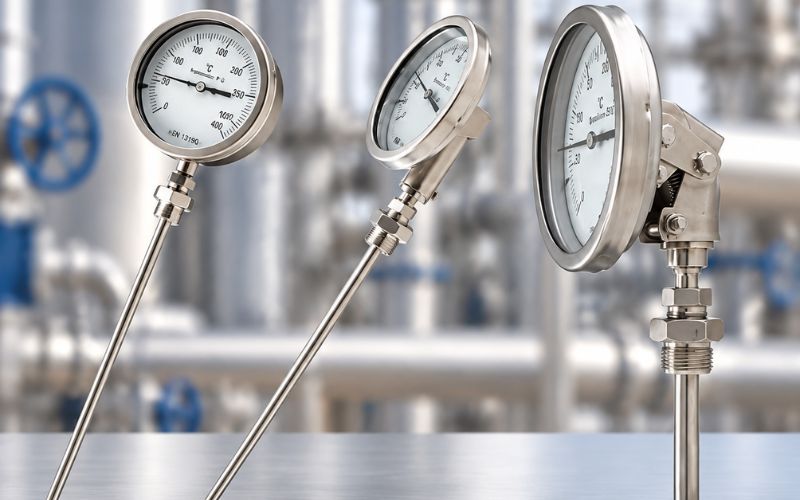
Accurate temperature measurement is essential for maintaining product quality, process efficiency, equipment safety, and reliable industrial operations. Industries such as pharmaceuticals, chemicals, food processing, engineering, HVAC, power generation, oil & gas, and manufacturing depend on reliable temperature measuring instruments for monitoring and controlling critical processes. Choosing the right Industrial Thermometer is therefore important for achieving accurate and consistent temperature readings.
For businesses looking for Thermometer Dealers in Mumbai, selecting a supplier with a wide product range and technical understanding can make the purchasing process easier. Different applications require different thermometer technologies, including Bimetallic Temperature Gauges, Resistance Thermometers, Surface Resistance Thermometers, Miniature Resistance Thermometers, Mercury in Steel Thermometers, and Industrial Thermometers.
Jayantilal Bros. supplies industrial temperature measurement instruments for diverse applications and helps customers select suitable thermometers based on temperature range, accuracy, installation requirements, process conditions, and application needs. This guide explains the major types of industrial thermometers, their working principles, applications, benefits, and important factors to consider when choosing an industrial thermometer supplier in Mumbai.
What is an Industrial Thermometer?
An Industrial Thermometer is a temperature measuring instrument designed to measure and monitor temperatures in industrial equipment, pipelines, tanks, machinery, and manufacturing processes.
Industrial thermometers are available in mechanical and electrical designs. The appropriate type depends on the required temperature range, accuracy, response time, installation location, process medium, and environmental conditions.
Common industrial temperature measuring instruments include:
- Bimetallic Temperature Gauges
- Resistance Thermometers
- Surface Resistance Thermometers
- Miniature Resistance Thermometers
- Mercury in Steel Thermometers
- Digital Industrial Thermometers
- Temperature Gauges
Why Accurate Temperature Measurement is Important
Temperature can directly affect product quality, process efficiency, and equipment performance. Accurate temperature monitoring helps industries:
- Maintain consistent process conditions
- Prevent overheating
- Protect machinery and equipment
- Improve product quality
- Reduce energy consumption
- Identify abnormal operating conditions
- Support preventive maintenance
- Improve workplace safety
- Maintain process efficiency
For critical industrial applications, the thermometer should be selected according to the actual process conditions rather than simply choosing a product based on price.
Types of Industrial Thermometers
1. Bimetallic Temperature Gauge
A Bimetallic Temperature Gauge uses two different metals with different coefficients of thermal expansion. When temperature changes, the metals expand or contract at different rates, causing the sensing element to move. This movement is converted into a temperature reading on the dial.
Applications
Bimetallic temperature gauges are commonly used in:
Boilers
Pumps
Compressors
Heat Exchangers
HVAC Systems
Process Equipment
Manufacturing Machinery
They are popular because of their simple construction, easy readability, and suitability for many industrial applications.
2. Resistance Thermometer
A Resistance Thermometer, commonly known as an RTD, measures temperature based on the change in electrical resistance of a sensing element as temperature changes.
Resistance thermometers are suitable for applications requiring accurate and repeatable temperature measurement.
Applications
Pharmaceutical Manufacturing
Food Processing
Chemical Plants
Industrial Automation
Process Control
Laboratory Equipment
Manufacturing Systems
RTDs are particularly useful where stable and precise temperature measurement is required.
3. Surface Resistance Thermometer
A Surface Resistance Thermometer is designed to measure the temperature of a surface without necessarily inserting a temperature sensor directly into the process.
These instruments can be used for monitoring:
Pipes
Tanks
Motors
Machinery
Industrial Equipment
Metal Surfaces
They are useful when direct penetration into the process is difficult or undesirable.
4. Miniature Resistance Thermometer
A Miniature Resistance Thermometer is a compact temperature sensor designed for applications where installation space is limited.
Its small size makes it suitable for:
OEM Equipment
Compact Machinery
Automation Systems
Laboratory Equipment
Small Process Systems
Instrumentation Applications
When choosing a miniature resistance thermometer, consider the available installation space, required temperature range, connection arrangement, and accuracy requirements.
5. Mercury in Steel Thermometer
A Mercury in Steel Thermometer is an industrial temperature measuring instrument in which the sensing element and indication system are designed for rugged industrial applications.
These thermometers can be used where robust construction and direct temperature indication are required.
Applications
Industrial Machinery
Processing Equipment
Manufacturing Plants
Chemical Applications
Heating Systems
The suitability of any thermometer should always be evaluated according to current application, safety, and regulatory requirements.
Industrial Applications of Thermometers
Pharmaceutical Industry
Temperature monitoring is important in pharmaceutical manufacturing, storage, sterilization, and process equipment. Accurate temperature measurement helps maintain controlled production conditions and product quality.
Chemical Industry
Chemical reactions and processes often depend on maintaining specific temperature ranges. Industrial thermometers help monitor reactors, pipelines, storage vessels, and processing equipment.
Food & Beverage Industry
Temperature measurement is essential during cooking, pasteurization, cooling, processing, and storage. Reliable industrial thermometers help maintain consistent process conditions.
HVAC Industry
Temperature gauges and thermometers are used in heating, ventilation, air-conditioning, chillers, cooling systems, and other HVAC equipment.
Power Generation
Power plants require temperature monitoring across boilers, turbines, heat exchangers, steam systems, and cooling equipment.
Engineering & Manufacturing
Industrial thermometers are used in machinery, hydraulic systems, compressors, furnaces, production equipment, and process lines.
Oil & Gas Industry
Temperature monitoring supports operations involving pipelines, storage systems, compressors, processing equipment, and refineries.
How to Choose the Right Industrial Thermometer
Before purchasing an industrial thermometer, consider the following factors.
Temperature Range
Determine the minimum and maximum temperature that the instrument will encounter. Select a thermometer with an appropriate operating range and suitable safety margin.
Accuracy
Choose the required accuracy according to the criticality of the application. Highly sensitive processes may require precision resistance thermometers or other specialized instruments.
Process Medium
Consider whether the thermometer will be exposed to:
- Water
- Steam
- Oil
- Gas
- Chemicals
- Food Products
- Air
The construction material and sensor type should be compatible with the process environment.
Installation
Consider how and where the thermometer will be installed. Common arrangements may include direct mounting, threaded connections, panel installation, or surface mounting.
Response Time
Applications with rapidly changing temperatures may require a thermometer with an appropriate response time.
Environmental Conditions
Temperature, vibration, humidity, pressure, dust, and corrosive surroundings can affect instrument performance. Select construction and protection suitable for the installation environment.
Benefits of Choosing the Right Industrial Thermometer
Selecting the appropriate temperature measuring instrument can provide:
- Accurate temperature monitoring
- Reliable process control
- Improved equipment protection
- Better product consistency
- Reduced maintenance requirements
- Longer instrument service life
- Improved operational efficiency
- Better preventive maintenance
- Reduced risk of temperature-related failures
What to Look for in Thermometer Dealers in Mumbai
When searching for Thermometer Dealers in Mumbai, businesses should evaluate more than product availability. Consider:
Product Range
A reliable supplier should offer different types of industrial thermometers for different applications.
Technical Support
The supplier should understand temperature range, accuracy, mounting, materials, and application requirements.
Product Quality
Industrial temperature instruments should be suitable for the operating environment and application.
Application Guidance
The right supplier should help customers select an appropriate instrument rather than recommending a generic thermometer for every application.
After-Sales Support
Technical assistance, calibration guidance, replacement support, and product information can be valuable for long-term industrial use.
Common Questions About Thermometer Dealers in Mumbai (FAQ)
Jayantilal Bros. supplies industrial thermometers and temperature measuring instruments in Mumbai for applications across manufacturing, chemical, pharmaceutical, HVAC, food processing, engineering, and other industries.
Common types include Bimetallic Temperature Gauges, Resistance Thermometers, Surface Resistance Thermometers, Miniature Resistance Thermometers, and Mercury in Steel Thermometers.
A Bimetallic Temperature Gauge uses two metals with different thermal expansion properties to mechanically indicate temperature on a calibrated dial.
A Resistance Thermometer or RTD measures temperature by detecting changes in the electrical resistance of its sensing element.
The suitable thermometer depends on temperature range, required accuracy, process medium, installation method, response time, and environmental conditions.
Calibration requirements depend on the application, instrument type, accuracy requirements, and quality system. Critical measurement applications should follow an appropriate calibration schedule.
Industrial thermometers are used in pharmaceutical, chemical, food and beverage, HVAC, power generation, oil & gas, engineering, manufacturing, and process industries.
Conclusion
Choosing the right Industrial Thermometer is essential for accurate temperature monitoring, process efficiency, equipment protection, and consistent product quality. From Bimetallic Temperature Gauges and Resistance Thermometers to Surface Resistance Thermometers and Miniature Resistance Thermometers, each instrument is designed for specific operating conditions and applications.
For businesses searching for Thermometer Dealers in Mumbai, it is important to work with a supplier that can provide suitable products along with application-focused guidance. Jayantilal Bros. offers a range of industrial temperature measuring instruments designed to meet the requirements of different process industries. By evaluating temperature range, accuracy, process conditions, installation, and environmental factors, industries can select a reliable temperature measurement solution for their specific needs.