
Temperature Gauge Baumer: Types, Features, Applications & Selection Guide
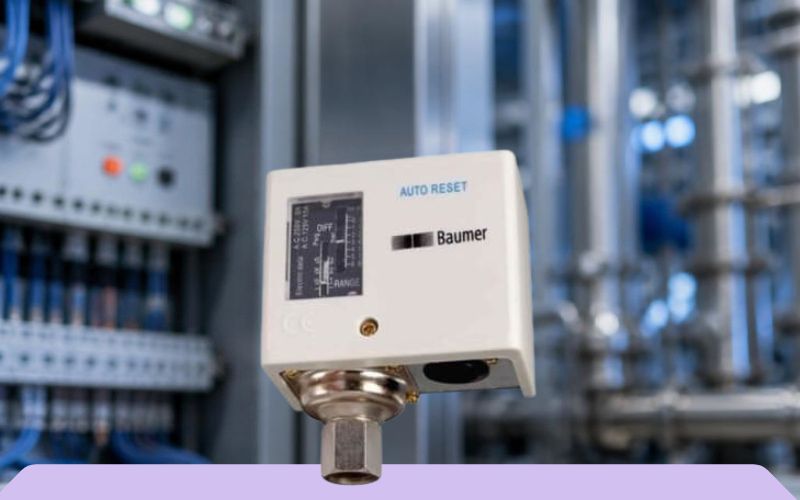
Accurate temperature measurement is essential for maintaining process efficiency, equipment safety, and product quality across industrial operations. Industries such as manufacturing, pharmaceuticals, chemicals, food processing, HVAC, power generation, and engineering rely on reliable temperature measuring instruments to monitor operating conditions.
A Temperature Gauge Baumer is designed for industrial temperature measurement applications where reliable and accurate local temperature indication is required. Baumer offers temperature measurement solutions suitable for different industrial processes and installation requirements.
Choosing the right Baumer Temperature Gauge depends on several factors, including temperature range, process connection, installation conditions, accuracy, response time, and application requirements. This guide explains Baumer temperature gauges, their working principle, types, applications, benefits, and important selection factors.
What is a Baumer Temperature Gauge?
A Baumer Temperature Gauge is an industrial temperature measuring instrument used to monitor and display the temperature of process equipment, machinery, pipelines, tanks, and other industrial systems.
Depending on the application, temperature measurement can be performed using different sensing technologies. The appropriate instrument should be selected based on the required temperature range, accuracy, process medium, installation method, and operating environment.
Baumer temperature measurement solutions are used in applications where dependable temperature monitoring and process control are required.
How Does a Temperature Gauge Work?
The working principle depends on the type of temperature measuring instrument.
A mechanical temperature gauge generally uses a temperature-sensitive element that responds to changes in temperature. This movement is transferred to an indicating mechanism, allowing the temperature to be displayed on a calibrated scale.
Electronic temperature sensors, such as resistance thermometers, measure temperature through changes in electrical resistance and can provide signals to monitoring or control systems.
Types of Temperature Gauges and Sensors
Bimetallic Temperature Gauge
A Bimetallic Temperature Gauge uses two different metals with different thermal expansion rates. Changes in temperature cause the sensing element to move, which operates the pointer on the dial.
These gauges are commonly used for local temperature indication in industrial equipment.
Resistance Thermometer
A Resistance Thermometer, or RTD, measures temperature through changes in the electrical resistance of its sensing element.
RTDs are suitable for applications requiring accurate and repeatable temperature measurement.
Industrial Temperature Sensors
Industrial temperature sensors can be used for process monitoring and automation applications where temperature data needs to be transmitted to a control or monitoring system.
Industrial Applications of Baumer Temperature Gauges
Manufacturing Industry
Temperature gauges are used to monitor machinery, production equipment, heating systems, and process lines.
Chemical Industry
Temperature measurement helps monitor chemical processes, tanks, reactors, pipelines, and other process equipment.
Pharmaceutical Industry
Accurate temperature monitoring is important for maintaining controlled conditions during pharmaceutical production and processing.
Food & Beverage Industry
Temperature measurement is used in processing, heating, cooling, storage, and other food manufacturing operations.
HVAC Industry
Temperature gauges and sensors help monitor heating, ventilation, cooling, chillers, and air-conditioning systems.
Power Generation
Temperature measurement is important for boilers, turbines, heat exchangers, cooling systems, and steam-related equipment.
Engineering Industry
Industrial temperature gauges are used in machinery, compressors, pumps, hydraulic systems, and other engineering applications.
Key Benefits of Baumer Temperature Gauges
- Reliable temperature measurement
- Easy local temperature monitoring
- Suitable for industrial applications
- Different sensing technologies available
- Suitable for process monitoring
- Robust industrial construction
- Easy integration with suitable measurement systems
- Suitable for a wide range of industries
How to Choose the Right Baumer Temperature Gauge
Before selecting a Baumer Temperature Gauge, consider the following factors.
Temperature Range
Determine the minimum, normal, and maximum temperature of the application. Select an instrument with a suitable measurement range.
Accuracy
Identify the required measurement accuracy based on the process and quality requirements.
Process Connection
Check the connection required for installation, including thread type, size, and configuration.
Sensor Type
Select the appropriate sensing technology, such as a bimetallic element or resistance thermometer, depending on the application.
Installation
Consider available space, mounting position, stem length, and accessibility for maintenance.
Process Conditions
Evaluate pressure, vibration, humidity, chemicals, and other environmental conditions that could affect instrument performance.
Baumer Temperature Gauge vs Bimetallic Temperature Gauge
Feature | Baumer Temperature Gauge | Bimetallic Temperature Gauge |
Measurement | Depends on model | Mechanical |
Display | Model dependent | Analog dial |
Application | Industrial temperature measurement | Local temperature monitoring |
Power Requirement | Model dependent | Not required for mechanical indication |
Accuracy | Model dependent | Suitable for general applications |
Installation | Model dependent | Direct or thermowell installation depending on design |
The correct instrument should be selected according to the application’s temperature range, accuracy, process conditions, and installation requirements.
Common Mistakes When Selecting a Temperature Gauge
Avoid these common mistakes:
- Choosing an unsuitable temperature range
- Ignoring process conditions
- Selecting the wrong process connection
- Not considering installation space
- Ignoring accuracy requirements
- Selecting an unsuitable sensor type
- Not considering vibration or environmental conditions
Why Choose Jayantilal Bros. for Baumer Temperature Gauges?
Jayantilal Bros. supplies industrial measurement instruments for pressure and temperature monitoring applications. Our product range includes Baumer Temperature Gauges, Industrial Thermometers, Bimetallic Temperature Gauges, Resistance Thermometers, Pressure Gauges, Pressure Switches, Pressure Transmitters, and Diaphragm Seals.
For customers searching for a Temperature Gauge Baumer, Baumer Temperature Gauge Supplier, or Baumer Temperature Gauge Dealer in Mumbai, Jayantilal Bros. can assist with selecting suitable measurement instruments based on application requirements.
Common Questions About Temperature Gauge Baumer (FAQ)
A Temperature Gauge Baumer is an industrial temperature measuring instrument used to monitor and indicate temperature in process equipment, machinery, pipelines, and other industrial applications.
They can be used across manufacturing, chemical, pharmaceutical, food processing, HVAC, engineering, power generation, and other industrial applications.
Consider temperature range, accuracy, sensor type, process connection, installation requirements, process medium, pressure, vibration, and environmental conditions.
A temperature gauge generally provides local temperature indication, while an RTD measures temperature through electrical resistance and can be connected to suitable monitoring or control equipment.
Depending on the instrument design and application, a suitable thermowell can be used to protect the temperature sensing element from process conditions.
Jayantilal Bros. supplies industrial measuring instruments and can assist customers looking for Baumer temperature measurement solutions based on their application requirements.
Conclusion
Selecting the right Temperature Gauge Baumer is important for accurate temperature monitoring and reliable industrial process operation. Temperature range, accuracy, sensor technology, process connection, installation, and environmental conditions should be considered before selecting an instrument.
For businesses looking for Baumer Temperature Gauges, Industrial Thermometers, or other temperature measuring instruments, Jayantilal Bros. provides industrial measurement solutions for a wide range of applications.