
How to Choose the Right Bimetallic Temperature Gauge for Industrial Applications
Accurate temperature measurement is essential for maintaining process efficiency, equipment safety, and product quality across industrial operations. From manufacturing plants and chemical processing facilities to food & beverage, pharmaceuticals, HVAC, power generation, and water treatment, industries rely on dependable temperature measuring instruments to monitor operating conditions.
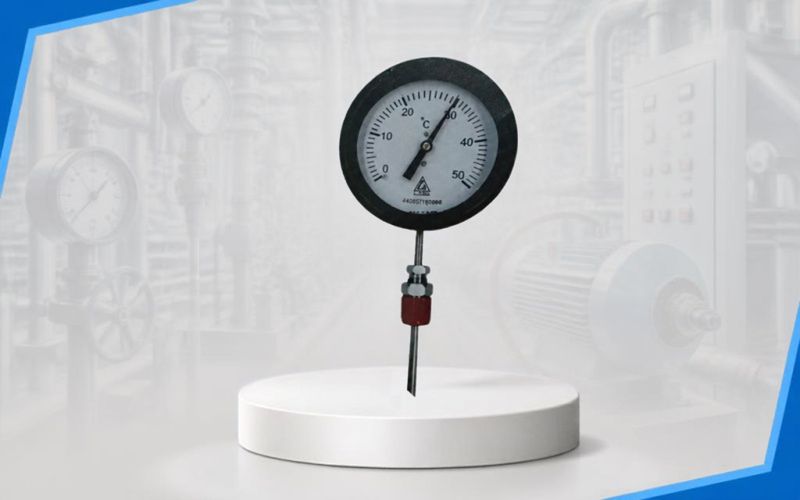
A Bimetallic Temperature Gauge is a mechanical temperature measuring instrument designed to provide direct, easy-to-read temperature indication without requiring an external power supply. Its simple construction, reliable operation, and suitability for industrial environments make it a practical solution for local temperature monitoring.
However, choosing the right Bimetallic Temperature Gauge involves more than selecting a temperature range. Factors such as dial size, temperature range, mounting arrangement, stem length, material of construction, process conditions, vibration, and readability can significantly affect instrument performance.
Jayantilal Bros. supplies industrial temperature measurement solutions, including Bimetallic Temperature Gauges, Industrial Thermometers, Resistance Thermometers, and other temperature measuring instruments. This guide explains how bimetallic temperature gauges work, when to use them, and the key factors to consider when selecting one for your application.
What is a Bimetallic Temperature Gauge?
A Bimetallic Temperature Gauge is a mechanical instrument used to measure and display temperature. It operates using a sensing element made from two different metals that respond differently to changes in temperature.
When the temperature changes, the two metals expand or contract at different rates. This movement is converted into the rotation of a pointer, which displays the temperature on a calibrated dial.
Because the mechanism is mechanical, a bimetallic temperature gauge does not require an external electrical power supply for local indication.
How Does a Bimetallic Temperature Gauge Work?
The working principle is based on the different thermal expansion rates of two bonded metals.
The basic process is:
- The sensing element is exposed to the process temperature.
- The two metals expand or contract at different rates.
- This difference causes the bimetallic element to bend or rotate.
- The movement is transferred to the pointer mechanism.
- The pointer moves across the calibrated dial.
- The operator can read the temperature directly.
This mechanical operating principle makes bimetallic thermometers suitable for applications where simple and reliable local temperature indication is required.
When Should You Use a Bimetallic Temperature Gauge?
A bimetallic temperature gauge can be considered when you need:
- Direct local temperature indication
- A mechanical temperature measuring solution
- Easy-to-read temperature display
- Operation without external power
- A rugged instrument for industrial environments
- Temperature monitoring of air, gases, or liquids
- A cost-effective solution for general process monitoring
These gauges are commonly used in manufacturing, HVAC, food processing, chemical processing, water treatment, and other industrial applications.
5 Important Factors When Choosing a Bimetallic Temperature Gauge
1. Select the Correct Temperature Range
The first consideration is the temperature range of your application.
Before purchasing a Bimetallic Temperature Gauge, identify:
Minimum process temperature
Normal operating temperature
Maximum process temperature
Expected temperature fluctuations
The selected gauge should have an appropriate range for the actual operating conditions.
A gauge that is not suitable for the process temperature may provide inaccurate readings or experience premature wear.
2. Choose the Right Dial Size
Dial size directly affects readability.
A small dial may be appropriate when the thermometer is installed close to the operator. Larger dials can be useful when the temperature needs to be read from a greater distance.
Consider:
Distance between operator and instrument
Available installation space
Required readability
Lighting conditions
Accessibility of the equipment
For large industrial installations, a larger Temperature Gauge can make local readings easier to observe.
3. Consider the Mounting and Connection
The mounting arrangement determines how the thermometer is installed and viewed.
Common configurations include:
Bottom Connection
The stem extends from the bottom of the thermometer and is suitable for many direct installation arrangements.
Back Connection
The stem is positioned at the rear of the instrument and can be suitable for panel or equipment installations.
Adjustable Mounting
An adjustable arrangement can help position the dial for improved visibility when the process connection and viewing direction are not aligned.
When selecting an Industrial Thermometer, always check the available installation space and process connection before ordering.
4. Select the Appropriate Material
Material selection is particularly important when the thermometer is exposed to demanding industrial environments.
Factors to consider include:
Corrosive surroundings
Process media
Humidity
Outdoor exposure
Chemical exposure
Mechanical conditions
For demanding environments, stainless steel construction can provide improved durability and corrosion resistance.
The material of the sensing stem and wetted components should be compatible with the process conditions.
5. Consider Vibration and Process Conditions
Industrial equipment such as pumps, compressors, motors, and rotating machinery can generate vibration.
Continuous vibration can affect mechanical instruments and may reduce readability or service life.
If the thermometer is installed in a high-vibration environment, the instrument configuration should be selected accordingly.
For applications involving significant vibration, it is also important to consider suitable mounting arrangements and protection.
Bimetallic Temperature Gauge with Thermowell
A thermowell can be used to protect a temperature instrument from process conditions while allowing temperature measurement.
Thermowells can be particularly useful where:
- Process pressure is high
- The process medium is corrosive
- The fluid is moving at high velocity
- The thermometer needs to be removed without interrupting the process
- Additional protection of the sensing stem is required
The appropriate thermowell design depends on process pressure, temperature, material compatibility, flow conditions, and installation requirements.
Bimetallic Temperature Gauge vs Resistance Thermometer
Feature | Bimetallic Temperature Gauge | Resistance Thermometer |
Operating Principle | Mechanical thermal expansion | Electrical resistance |
External Power | Not required for local indication | Generally required for signal processing |
Display | Analog dial | Electrical/digital output |
Installation | Simple local indication | Process measurement/control |
Application | General temperature monitoring | Precise temperature measurement |
Maintenance | Generally simple | Depends on sensor and instrumentation |
Industrial Applications of Bimetallic Temperature Gauges
Manufacturing Industry
Used for monitoring temperatures in machinery, production equipment, hydraulic systems, compressors, and process lines.
Chemical Industry
Suitable for monitoring temperature in tanks, pipelines, processing equipment, and other industrial systems when the instrument materials are compatible with the application.
Food & Beverage Industry
Temperature monitoring is important in processing, heating, cooling, and storage operations.
HVAC Systems
Used for monitoring temperature in heating, cooling, ventilation, chillers, and related equipment.
Water & Wastewater Treatment
Temperature gauges can be used for monitoring pumps, tanks, pipelines, and treatment equipment.
Power Generation
Temperature measurement is important for boilers, heat exchangers, cooling systems, and other process equipment.
Key Benefits of Bimetallic Temperature Gauges
- Simple mechanical operation
- No external power required for local indication
- Easy-to-read analog display
- Suitable for industrial environments
- Straightforward installation
- Available in different configurations
- Low-complexity design
- Suitable for a wide range of general industrial applications
- Can be used with suitable thermowells where required
Common Mistakes When Selecting a Bimetallic Temperature Gauge
Avoid these common mistakes:
Choosing Only Based on Price
The lowest-cost thermometer may not be suitable for the actual process conditions.
Ignoring Temperature Range
Always check minimum, normal, and maximum operating temperatures.
Selecting the Wrong Connection
The mounting arrangement must match the equipment and available installation space.
Ignoring Vibration
Pumps, compressors, and rotating machinery can create conditions that require additional consideration.
Choosing Incompatible Materials
The stem and other exposed components should be suitable for the process environment.
Ignoring Readability
The dial should be large enough for the operator to read the temperature safely and conveniently.
How to Choose a Bimetallic Temperature Gauge for Your Application
Before ordering, prepare the following information:
- Required temperature range
- Normal operating temperature
- Maximum process temperature
- Process medium
- Dial size
- Stem length
- Connection type
- Mounting arrangement
- Material requirement
- Vibration conditions
- Thermowell requirement
- Accuracy requirement
- Environmental conditions
Providing these details to your instrumentation supplier can make product selection more accurate.
Why Choose Jayantilal Bros. for Bimetallic Temperature Gauges?
Jayantilal Bros. provides industrial temperature and pressure measurement solutions for a variety of applications. Its product portfolio includes Bimetallic Temperature Gauges, Industrial Thermometers, Resistance Thermometers, Pressure Gauges, Diaphragm Seals, Pressure Switches, and Pressure Transmitters.
The company also lists H Guru Bimetallic Temperature Gauges along with other H Guru temperature and pressure measurement products.
For customers looking for a Bimetallic Temperature Gauge Supplier or Thermometer Dealer in Mumbai, Jayantilal Bros. can assist with selecting an appropriate instrument based on the application, temperature range, mounting requirements, and process conditions.
Common Questions About Bimetallic Temperature Gauges
A Bimetallic Temperature Gauge is a mechanical instrument that measures temperature using two bonded metals that expand at different rates when exposed to temperature changes.
A conventional mechanical bimetallic temperature gauge provides local temperature indication without requiring an external electrical power supply.
They are commonly used in manufacturing, HVAC, chemical processing, food processing, water treatment, power generation, and general industrial applications.
Consider temperature range, dial size, mounting arrangement, stem length, material, process conditions, vibration, readability, and whether a thermowell is required.
A bimetallic temperature gauge provides mechanical local indication, while an RTD measures temperature through changes in electrical resistance and can be integrated with electronic monitoring and control systems.
Yes. A suitable thermowell can provide protection for the temperature instrument in applications involving pressure, corrosive media, flow, or other demanding process conditions.
Conclusion
Selecting the right Bimetallic Temperature Gauge requires more than choosing a temperature range. Dial size, mounting configuration, material compatibility, stem dimensions, vibration, process conditions, readability, and thermowell requirements should all be considered before selecting an instrument.
For general industrial applications requiring dependable local temperature indication, a properly selected bimetallic temperature gauge can provide a simple and practical measurement solution. Jayantilal Bros. offers industrial temperature measurement products, including Bimetallic Temperature Gauges, Industrial Thermometers, and Resistance Thermometers, helping customers identify suitable instrumentation for their specific process requirements.