
What is a Diaphragm Seal? Types, Applications & Selection Guide
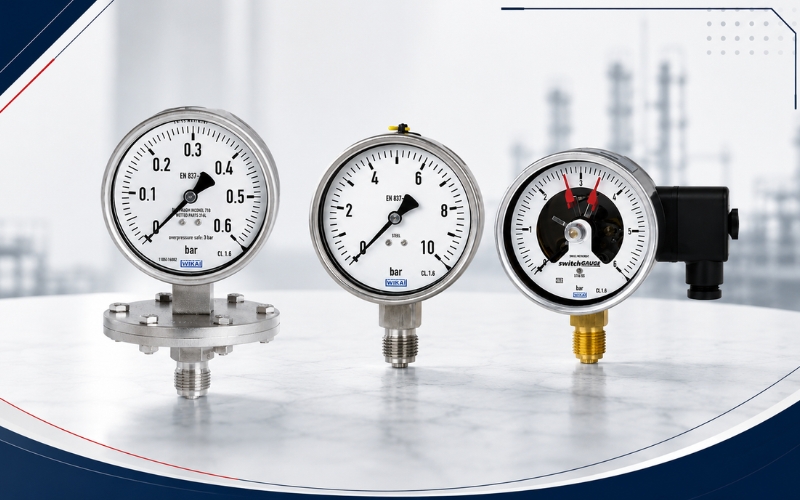
Accurate pressure measurement is essential for maintaining safety, efficiency, and reliability in industrial processes. However, standard pressure gauges may not perform effectively when measuring highly viscous, corrosive, crystallizing, or contaminated process media. In such environments, direct contact between the pressure measuring instrument and the process fluid can damage the gauge, reduce accuracy, and increase maintenance costs. This is where Diaphragm Seals play a vital role.
A Diaphragm Seal is a protective device installed between the process connection and the pressure measuring instrument. It isolates the pressure gauge, pressure transmitter, or pressure switch from aggressive media while accurately transmitting process pressure through a specially filled system. Diaphragm seals are widely used in industries such as pharmaceuticals, food & beverage, chemicals, oil & gas, water treatment, power generation, and biotechnology, where process hygiene, corrosion resistance, and reliable pressure measurement are critical.
Jayantilal Bros. offers a comprehensive range of Diaphragm Seals, Pressure Gauges with Diaphragm Seals, Chemical Sealed Pressure Gauges, Flushing Rings, and Diaphragm Seal Accessories to meet the requirements of various industrial applications. This guide explains diaphragm seals, their working principles, types, applications, benefits, accessories, and selection criteria.
What is a Diaphragm Seal?
A Diaphragm Seal is a pressure-isolating device that protects pressure instruments from direct contact with process media. It consists of a flexible metallic diaphragm welded to a housing filled with a compatible transmission fluid.
When process pressure is applied, the diaphragm deflects, transmitting the pressure through the fill fluid to the connected pressure gauge, pressure transmitter, or pressure switch without exposing the instrument to the process media.
Diaphragm seals are especially useful for handling:
- Corrosive chemicals
- Highly viscous liquids
- Slurries
- Crystallizing fluids
- Hygienic process media
- High-temperature applications
- Toxic fluids
Why Use a Diaphragm Seal?
Installing a diaphragm seal offers several advantages:
- Protects pressure instruments from corrosive media
- Prevents clogging caused by viscous fluids
- Improves measurement accuracy
- Extends instrument life
- Enables pressure measurement at high temperatures
- Maintains hygienic conditions in sanitary applications
- Reduces maintenance and replacement costs
- Ensures operator safety
How Does a Diaphragm Seal Work?
A diaphragm seal operates using a simple yet highly effective mechanism.
- Process pressure acts on the flexible diaphragm.
- The diaphragm deflects according to the applied pressure.
- The internal fill fluid transfers the pressure to the pressure instrument.
- The pressure gauge or transmitter displays the accurate reading without coming into contact with the process media.
This isolation protects the measuring instrument while maintaining precise pressure measurement.
Types of Diaphragm Seals
1. Threaded Diaphragm Seal
Designed for standard threaded process connections.
Applications:
- General Industrial Processes
- Hydraulic Systems
- Water Treatment Plants
2. Flanged Diaphragm Seal
Suitable for large pipelines and process vessels.
Applications:
- Chemical Plants
- Petrochemical Industry
- Oil & Gas Plants
- Refineries
3. In-Line Diaphragm Seal with Sterile Connection
These diaphragm seals are specially designed for hygienic applications requiring contamination-free pressure measurement.
Applications:
- Pharmaceutical Industry
- Food Processing
- Dairy Plants
- Beverage Industry
- Biotechnology
4. Chemical Sealed Pressure Gauge
A Chemical Sealed Pressure Gauge combines a pressure gauge with a diaphragm seal, making it ideal for corrosive and aggressive process media.
Applications:
- Acid Handling
- Chemical Processing
- Fertilizer Plants
- Wastewater Treatment
5. Flush Diaphragm Seal
Designed to prevent media accumulation on the diaphragm surface.
Applications:
- Slurry Handling
- Paint Industry
- Food Processing
- Pulp & Paper Industry
Diaphragm Seal Accessories
Proper accessories improve installation, maintenance, and instrument performance.
Flushing Ring
A Flushing Ring is installed between the diaphragm seal and the process connection. It allows cleaning or flushing of the diaphragm without removing the pressure instrument.
Benefits include:
- Easy cleaning
- Reduced downtime
- Longer diaphragm life
- Better measurement accuracy
Flush Ring
A Flush Ring performs the same function as a flushing ring and is widely used in chemical and pharmaceutical industries to maintain process cleanliness.
Capillary System
Capillary tubing separates the diaphragm seal from the pressure instrument, protecting it from excessive process temperatures and vibration.
Cooling Elements
Cooling elements reduce heat transfer from high-temperature processes to the pressure instrument.
Mounting Accessories
Various adapters, connectors, and fittings simplify installation and improve compatibility with different process connections.
Industrial Applications of Diaphragm Seals
Chemical Industry
Protect pressure gauges from corrosive acids, alkalis, and aggressive chemicals while ensuring reliable pressure monitoring.
Pharmaceutical Industry
Maintain sterile pressure measurement in reactors, mixing vessels, and clean process lines.
Food & Beverage Industry
Support hygienic pressure monitoring in dairy processing, breweries, beverage production, and food manufacturing.
Oil & Gas Industry
Provide reliable pressure measurement in high-pressure pipelines, offshore platforms, and refineries.
Water & Wastewater Treatment
Protect pressure instruments from sludge, chemicals, and contaminated water during treatment processes.
Power Plants
Used in steam systems, boiler applications, and cooling circuits where high temperatures require protected pressure measurement.
Pulp & Paper Industry
Prevent clogging caused by fibrous slurries and high-viscosity process fluids.
Paint & Coating Industry
Ensure accurate pressure measurement in thick and highly viscous coating materials.
Key Benefits of Diaphragm Seals
- Prevents corrosion damage
- Suitable for aggressive chemicals
- Handles high-temperature processes
- Prevents blockage by viscous media
- Hygienic design for sanitary industries
- Improves pressure measurement accuracy
- Extends pressure gauge life
- Low maintenance requirements
- Compatible with pressure gauges, pressure switches, and pressure transmitters
- Reduces overall operating costs
How to Select the Right Diaphragm Seal
Selecting the appropriate diaphragm seal depends on several important factors.
Process Media
Identify whether the media is:
- Acid
- Alkali
- Slurry
- Steam
- Oil
- Food Products
- Pharmaceutical Fluids
Operating Pressure
Choose a diaphragm seal designed for your system’s maximum operating pressure.
Operating Temperature
High-temperature processes may require capillary systems or cooling elements.
Process Connection
Select the appropriate connection type:
- Threaded
- Flanged
- Hygienic
- Sterile Connection
Diaphragm Material
Common materials include:
- Stainless Steel
- Hastelloy
- Monel
- Tantalum
- PTFE Coated Diaphragms
Material selection depends on media compatibility.
Instrument Compatibility
Ensure the diaphragm seal is compatible with:
- Pressure Gauges
- Pressure Switches
- Pressure Transmitters
Why Choose Jayantilal Bros.?
Jayantilal Bros. supplies premium-quality industrial pressure measurement solutions for diverse industries. Our product range includes:
- Diaphragm Seals
- Pressure Gauges with Diaphragm Seals
- Chemical Sealed Pressure Gauges
- Flushing Rings
- Flush Rings
- Pressure Gauges
- Pressure Switches
- Pressure Transmitters
- Industrial Measuring Instruments
- Temperature Gauges
We help customers choose the right diaphragm seal configuration based on process conditions, operating temperatures, media compatibility, and industry requirements.
Conclusion
A Diaphragm Seal is an essential component for accurate pressure measurement in challenging industrial environments where standard pressure gauges cannot be exposed directly to aggressive, viscous, or hygienic process media. By protecting measuring instruments from corrosion, contamination, high temperatures, and clogging, diaphragm seals improve safety, extend equipment life, and ensure reliable performance. Whether you need Pressure Gauges with Diaphragm Seals, Chemical Sealed Pressure Gauges, Flushing Rings, or Diaphragm Seal Accessories, Jayantilal Bros. provides high-quality solutions backed by technical expertise to meet the needs of a wide range of industries.
Diaphragm Seals (FAQ)
A diaphragm seal is a protective device that isolates pressure measuring instruments from corrosive, viscous, or contaminated process media while transmitting pressure accurately.
It protects pressure gauges and transmitters from damage, improves measurement accuracy, and extends instrument life.
. A flushing ring allows easy cleaning of the diaphragm seal without removing the pressure instrument from the process.
Bourdon Tube Gauges are suitable for clean fluids and gases, while Diaphragm Pressure Gauges are ideal for viscous, corrosive, or contaminated media.
Chemical, pharmaceutical, food & beverage, dairy, biotechnology, water treatment, oil & gas, and power generation industries.
Yes. Diaphragm seals are compatible with pressure gauges, pressure transmitters, and pressure switches for accurate and protected pressure measurement.